
Realistic gore effects depend on lighting, texture, and timing. AI can help you prototype and iterate quickly—especially when you use phrases that evoke practical effects rather than raw violence.
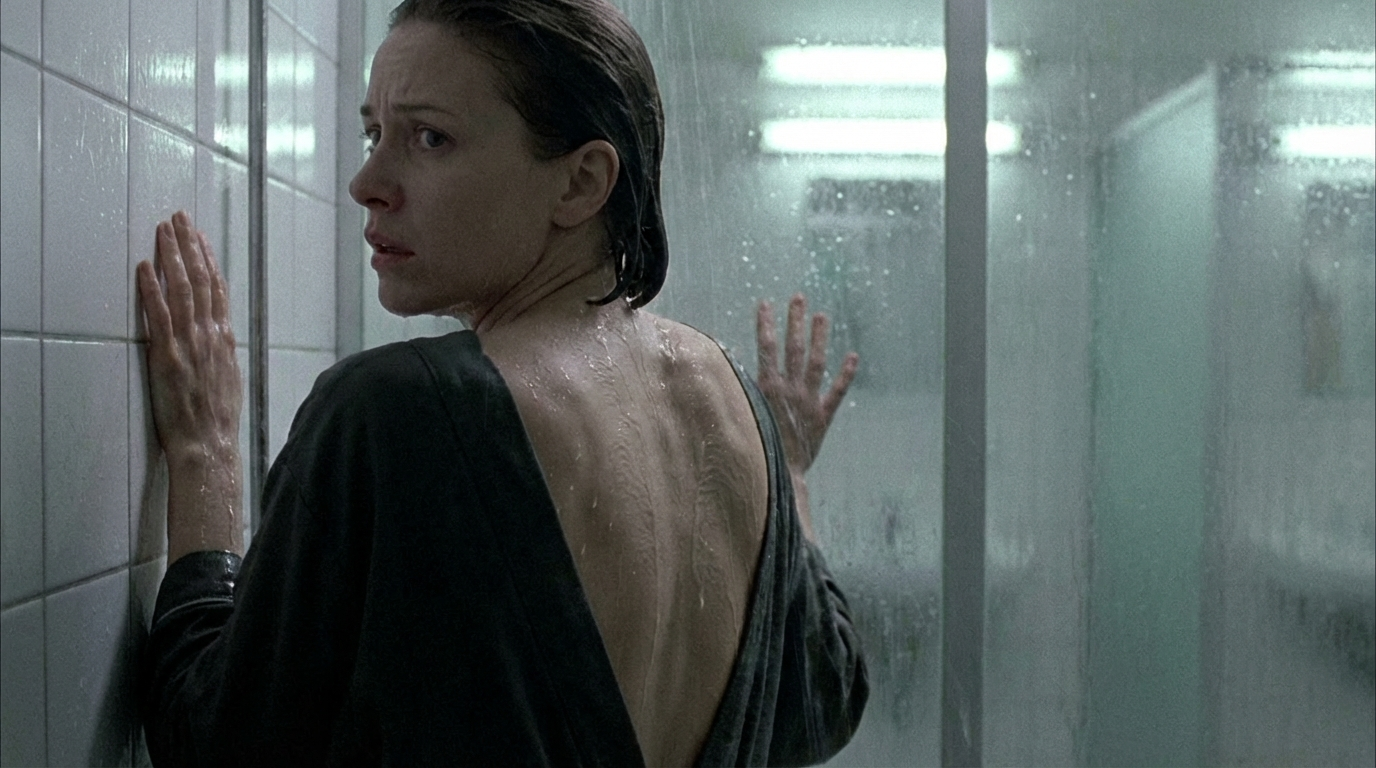
Techniques from the prompt above
Practical effects language: Use "practical effects preparation" and "skin appearing to move independently creating ripples"—this hints at body horror without explicit gore and keeps prompts within content guidelines.
Lighting: "Harsh fluorescent lighting through frosted glass" gives that clinical, institutional look. Cold light makes dread feel more visceral than warm tones.
Environment: "Institutional shower stall" and "cold clinical shower room" anchor the scene in medical/body horror. White tile and sterile settings amplify the wrongness.
Character state: "Expression of dread" and "hands pressed against white tile wall" communicate fear physically. The "subtle rhythmic pulsing along spine" suggests something beneath the surface—implied horror.
Film look: "35mm aesthetic" and "medium close-up" keep it cinematic rather than documentary.
Tips for realism
- Match blood color to the scene lighting—use "dark crimson" or "crimson paint" in slasher contexts
- Add secondary motion like dripping and splatter
- Keep pacing slow enough for viewers to register detail
- Use "practical effects" phrasing to stay within AI guardrails
Ready to build your next horror project?
Join the Discord: https://discord.gg/r93kwVHPmq
Sign up: https://darkframe.ai/signup